

What Triggers Withdrawal Verification Checks at Casinos That Skip Standard KYC?
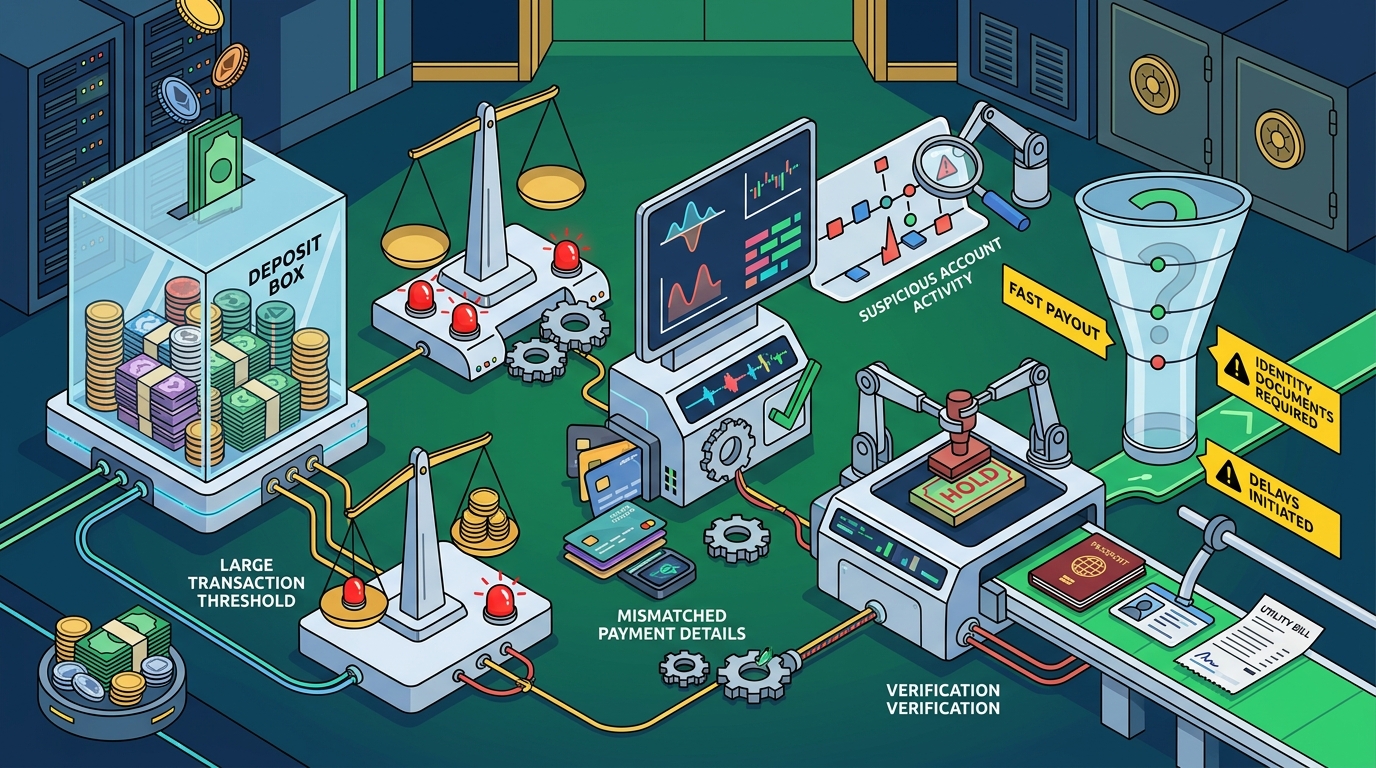
Withdrawal verification at minimal-KYC casinos is typically triggered by large transaction volumes, mismatched payment details, or suspicious account activity. Platforms like Jackpotter streamline initial onboarding but retain the right to request identity documents when risk controls flag a payout. Understanding these triggers helps players prepare the correct documents in advance, ensuring faster processing and fewer delays during cash-out. For additional details, review the Community Powered Crypto Casino.
Transaction Volume and Threshold Limits
Most online gambling operators implement tiered verification systems where the amount requested for withdrawal dictates the level of scrutiny applied. A volume threshold is a specific monetary limit that, when exceeded, automatically prompts the compliance team to review the account. For many crypto-forward platforms, small withdrawals under a certain limit may process instantly, while larger sums require manual review. For additional details, review the Casino Jackpotter.
At Jackpotter, the system is designed for speed, but regulatory obligations still apply to significant funds. If a player attempts to withdraw a sum that is disproportionately large compared to their deposit history or total wagering volume, the system may flag the transaction. This is a standard anti-money laundering (AML) protocol. The implication for players is that consistent, moderate withdrawal patterns are less likely to trigger a full identity check than a single, massive cash-out after a short period of play.
Payment Method Mismatches and Source of Funds
Discrepancies between the registered account details and the withdrawal destination are a primary trigger for verification requests. A payment mismatch occurs when the name on the crypto wallet or bank account does not match the name on the casino profile. Even in platforms that skip standard KYC for deposits, the withdrawal destination must align with the account holder's identity to prevent fraud.
For example, if a user deposits using a specific Bitcoin address but attempts to withdraw to a completely different wallet that has no prior transaction history with the platform, the risk engine may pause the payout. Jackpotter supports a wide range of cryptocurrencies, including Bitcoin, Ethereum, and USDT. To avoid delays, players should ensure that their withdrawal wallet is registered or verified in their account settings before initiating a large cash-out. This proactive step reduces the likelihood of a manual review.
Anti-Money Laundering and Fraud Flags
Automated risk engines monitor account behavior for patterns that resemble money laundering or fraud. An AML flag is a system-generated alert that indicates unusual activity, such as rapid deposits and withdrawals, or playing high-stakes games with funds from multiple different sources. These flags are not always negative; they simply indicate that the system needs more data to confirm the legitimacy of the funds.
Required Documents and Verification Speed
When a verification check is triggered, the player is usually asked to provide specific identity documents. A proof of identity document is a government-issued ID, such as a passport or driver's license, that confirms the player's legal name and date of birth. Additionally, a proof of address document, such as a utility bill or bank statement, may be required to verify the player's location.
Jackpotter aims to process these verifications quickly, often within 24 to 48 hours, depending on the complexity of the case. Players should ensure their documents are clear, valid, and match the details in their profile. Blurry images or expired documents are a common cause of rejection and delay. By preparing high-quality scans in advance, players can expedite the process. The platform's support team is available to assist with any questions regarding the verification status.
Best Practices for Smooth Withdrawals
Proactive account management is the best way to avoid unexpected verification delays. A smooth withdrawal is a cash-out that processes without manual intervention, which is achieved by maintaining a clean account history and consistent payment methods. Players should avoid using third-party wallets or services that do not belong to them, as this is a major trigger for fraud checks.
At Jackpotter, players can benefit from the platform's fast payout structure by keeping their account details up to date. Regularly updating personal information and ensuring that all payment methods are verified helps the system trust the account. This approach not only speeds up withdrawals but also enhances the overall gaming experience. By following these best practices, players can enjoy the benefits of a minimal-KYC platform without facing unnecessary hurdles.
Key Takeaways
- Large withdrawal amounts relative to deposit history are a common trigger for manual verification.
- Payment mismatches, such as using a different wallet for withdrawal than for deposit, can delay payouts.
- Unusual account behavior, like rapid deposit and withdrawal cycles, may trigger AML flags.
- Clear and valid proof of identity and address documents are required when verification is triggered.
- Jackpotter processes verifications quickly, but players should ensure document quality to avoid rejections.
- Consistent gameplay and authentic account usage help maintain a clean history and faster cash-outs.
- Keeping account details and payment methods up to date is essential for a smooth withdrawal experience.
Frequently Asked Questions
Why would a minimal-KYC casino ask for my ID?
Minimal-KYC casinos skip standard identity checks for small transactions but must comply with anti-money laundering regulations for larger sums. If your withdrawal exceeds a certain threshold or triggers a risk flag, the platform will request your ID to verify your identity and ensure the funds are legitimate.
How long does verification take at Jackpotter?
Verification at Jackpotter is typically processed within 24 to 48 hours. The exact time depends on the complexity of the case and the quality of the documents provided. Clear, valid documents usually result in faster approval.
Can I withdraw to a different wallet than I used for deposits?
While it is possible, withdrawing to a different wallet may trigger a verification check. To avoid delays, it is best to use the same wallet or a verified wallet associated with your account. If you must use a different wallet, be prepared to provide additional verification documents.
What documents do I need for verification?
You typically need a government-issued ID, such as a passport or driver's license, and a proof of address document, such as a utility bill or bank statement. Ensure that the documents are clear, valid, and match the details in your account profile.
Will my account be suspended if I fail verification?
Your account will not be suspended, but your withdrawal will be paused until the verification is complete. If you fail to provide the required documents within a specified timeframe, the platform may close the account and forfeit any remaining balance. It is important to respond promptly to verification requests.
Does Jackpotter require KYC for all withdrawals?
No, Jackpotter does not require KYC for all withdrawals. Small withdrawals may process instantly without verification. However, larger withdrawals or those that trigger risk flags will require identity verification. The specific threshold depends on the platform's current risk policies.